Art Against Gender-Based Violence in the Americas
FIRST THINGS FIRST . . . .
This lesson examines how artists have used their work to confront gender-based violence and reclaim both visual culture and public spaces as multifaceted sites of resistance, witnessing, and collective action across the Americas. Students are introduced to how artists, often involved with women’s movements, developed new forms of artistic practice that have challenged the normalization of gender-based violence over the past five decades. While gender-based violence affects all people, this lesson focuses predominantly on artworks that address violence against women, reflecting both the historical conditions under which feminist artistic practices emerged and the disproportionate impact of gendered and sexual violence on women, girls, and femme-identifying people. The lesson begins with artists who transformed personal experiences into political action through community-based interventions aimed at creating dialogue, raising awareness, and instigating change during the 1970s. Their foundational works, each having been reactivated in the twenty-first century, underscore the continued urgency of these concerns for students today. Secondly, the lesson addresses more recent works that extend these imperatives across diverse contexts in Canada, Guatemala, Mexico, Peru, and the United States of America, taking a variety of individual and collaborative forms, including performance, installation, textiles, street art, counter-monuments, and ancestral methods. These case studies emphasize the ways intersectionality and distinct histories of colonialism have impacted gender-based violence across the Americas and how artists have addressed their historical complexities and erasures with their works. Guiding questions ask the students to consider the “efficacy” of these practices in challenging dominant narratives, creating lasting change, and offering moments of collective healing for communities through grief, protest, and care. The lesson also includes suggestions for navigating sensitive content with students, creating engaged activities that deepen student understanding of art as a tool for social transformation, and best practices for recreating two of the highlighted works.
Themes & Background Readings
Ellen C. Caldwell, Cynthia S. Colburn, and Ella J. Gonzalez, eds. Gender Violence, Art, and the Viewer: An Intervention (Penn State University Press, 2024)
This publication serves as a comprehensive resource to introduce the major terms, contexts, and theoretical frameworks relevant to this lecture on gender-based violence and art. It also offers case studies that pertain to the contemporary contexts and some artworks in this lecture as well as earlier works if you wish to extend the discussion.
Sarah Banet-Weiser, “Radical Vulnerability: Feminism, Victimhood and Agency” in Re-writing Women as Victims: From Theory to Practice edited by María José Gámez Fuentes, Sonia Nuñez Puente, and Emma Gómex Noclau (Routledge, 2019)
This chapter gives a good outline of the ways survivors in the US are framed broadly in the media following the context of what has been referred to as the #metoo era and anchors itself in a discussion of Emma Sulkowicz’s work.
Rosa-Linda Fregoso and Cynthia Bejarano, eds. Terrorizing Women: Feminicide in the Americas (Duke University Press, 2010)
This publication offers an interdisciplinary foundation for understanding feminicide as a structural, rather than individual, form of violence with case studies that provide critical context for the artworks and themes explored in this lesson.
Kim Anderson, Maria Campbell, and Christi Belcourt, eds. Keetsahnak / Our Missing and Murdered Indigenous Sisters (University of Alberta Press, 2018)
This collection brings together Indigenous scholars, activists, and artists to address the ongoing crisis of MMIWG2S+, situating it within broader histories of settler colonialism and resistance. It is a useful resource for understanding the foundations of MMIWG2S+ and how art, storytelling, and activism have intersected with movements for justice and healing, including some artists (like Christi Belcourt) who are included in this lesson.
BRING HER HOME, Directed by Leya Hale (2022).
This is an excellent documentary (accessible for students) that follows three Indigenous women (an artist, activist, and politician) navigating the MMIWG2S+ crisis . It is available through PBS and has an educator’s guide: https://mass.pbslearningmedia.org/resource/bring-her-home-video/bring-her-home/
The following publications pertain more specifically some of the artworks included in each section of this lesson that are not considered in the above publications or exhibitions:
Gender-Based Violence and the Origins of Feminist Art
- Emma Sulkowicz in conversation with Roberta Smith, “Carry That Weight,” Brooklyn Museum, December 17, 2014. https://www.youtube.com/watch?v=OMXp3RLOVNg
- Roberta Smith, “In a Mattress, a Lever for Art and Political Protest,” New York Times, September 21, 2014. https://www.nytimes.com/2014/09/22/arts/design/in-a-mattress-a-fulcrum-of-art-and-political-protest.html
- Emma Sulkowicz, “The Importance of Bad Art,” The Institute of Art and Ideas. https://www.youtube.com/watch?v=RPA_ADatO0s
- Angelique Szymanek, “Performing a Public for Rape: The Collaorative Performances of Suzanne Lacy and Leslie Labowitz-Starus.” Woman’s Art Journal 39, no. 1 (2018): 32–42. https://www.jstor.org/stable/26430800
- Karen Cordero Reiman, “Politics of Enunciation and Affect in an Age of Corporeal Violence: Mónica Mayer’s The Clothesline and Pinto mi Raya’s Embraces” in The New Public Art: Collectivity and Activism in Mexico since the 1980s edited by Mara Polgovsky Ezcurra (University of Texas Press, 2023). https://muse.jhu.edu/pub/15/edited_volume/chapter/3976424
- Alberto McKellighan Hernandez, “Mónica Mayer, The Clothesline,” Smarthistory, https://smarthistory.org/monica-mayer-clothesline/
- “Three Weeks in January: End Rape in Los Angeles,” LACE (Los Angeles Contemporary Exhibitions). https://welcometolace.org/lace/three-weeks-in-january-end-rape-in-los-angeles/
Performance Art and Feminicide in Latin America
-
- Camila Ordorica, “From Femicide to Feminicidio: Latin American Contributions to Feminist Conceptual History” in Contributions to the History of Concepts 17, no. 1 (2022): 45-61. https://doi.org/10.3167/choc.2022.170103
- Kathrin Suppanz, “Performing Gore: Lorena Wolffer’s Mientras dormíamos (el caso Juárez).” Cosmos: Feminist Art Practices and Research 1, no. 1 (2025). https://doi.org/10.1080/29986982.2025.2536025
- Tania Islas Weinstein, “Expuestas: Laborious Expectations and the Plight of Feminist Art in Contemporary Mexico.” Signs: Journal of Women in Culture and Society 45, no. 4 (2020): 903-929. https://www.journals.uchicago.edu/doi/epdf/10.1086/707800
- Interview with Regina José Galindo by Francisco Goldman, BOMB (2006). https://bombmagazine.org/articles/2006/01/01/regina-jos%C3%A9-galindo/
- Emilia Barbosa, “Regina José Galindo’s Body Talk: Performing Feminicide and Violence against Women in 279 Golpes.” Latin American Perspectives 41, no. 1 (2013). https://doi.org/10.1177/0094582X1349213
- Patricio Boyer, “Documenting Galindo documenting.” Text and Performance Quarterly (2025). https://doi.org/10.1080/10462937.2025.2547658
Activism and Ancestral Traditions
- Gabriela Germaná, “Huchamanta kacharisqa kaq / La que está libre de pecado / The she who is free of sin.” _VIGILGONZALES (2024). https://vigilgonzales.com/projects-fairs/arcomadrid-nunca-lo-mismo-arte-latinoamericano-section-booth-nlm01-curated-by-manuela-moscoso-2024/
- Luzene Hill, “Retracing the Trace.” Thesis (2012). https://www.proquest.com/openview/193d441d18e83f9698532fdaca61efff/1?pq-origsite=gscholar&cbl=18750
- Website for Cannupa Hanska Luger, Every One (2018) with extensive documentation and resources: https://www.cannupahanska.com/social-engagement/every-one
- Website for Walking with Our Sisters, 2012–19 with extensive documentation and resources: http://walkingwithoursisters.ca/
- Stephaie G. Anderson, “Stitching through Silence: Walking With Our Sisters, Honoring the Missing and Murdered Aboriginal Women in Canada.” Textile: Cloth and Culture 14, no. 1 (2016): 84 – 97. https://doi.org/10.1080/14759756.2016.1142765
- Wanda Nanibush and Rebecca Belmore, “Rebecca Belmore All of My Relations.” Aperture 240 (2020): 116–125. https://www.jstor.org/stable/27078376
Transforming Public Spaces and Monuments
- Angélica Abelleyra, “On women, art, public space, and action. Helen Escobedo and Lorena Wolffer.” Universidad Nacional Autónoma de México, Coordinación de Humanidades, Centro de Investigaciones sobre América del Norte (2014): 46–51. https://ru.micisan.unam.mx/handle/123456789/19451?locale-attribute=en
- Natalia Stengel Peña, “Cerrucha’s Trinchera. A Feminist Artistic Response to the War Against Women.” Asparkía 43 (2023): 63-85. https://dialnet.unirioja.es/servlet/articulo?codigo=9315697
- Erin L. McCutcheon, “Monumental Interventions: Feminism, Art, and Public Resistance in Mexico.” AWARE, December 23, 2022. https://awarewomenartists.com/en/magazine/interventions-monumentales-feminisme-art-et-resistance-publique-au-mexique/
- Erin L. McCutcheon, “Reclamation, Revision, Resistance: Histories of Feminism and Art in Mexico City.” AWARE Webinar #11. https://awarewomenartists.com/en/archive_videos/webinars-team/
- Angelique Szymanek, “Elina Chauvet: Decolonizing Disappearance.” Latin American and Latinx Visual Culture 4, no. 1 (2022): 58–74. https://doi.org/10.1525/lavc.2022.4.1.58
- Johanna Spanke, “Countering Columbus: “La Glorieta de las Mujeres que Luchan”—Antimonuments and Artistic Interventions on the Paseo de la Reforma in Mexico City.” Latin American and Latinx Visual Culture 7, no. 3 (2025): 4–26. https://doi.org/10.1525/lavc.2025.7.3.4
- Jarah Das, “Doreen Garner: On White Monumentality and Sacrificial Aesthetics.” X-tra 23, no. 2 (2021). https://www.x-traonline.org/article/doreen-garner-on-white-monumentality-and-sacrificial-aesthetics
- Forrest Melrath, “Toppling the White Man on a Pedestal,” Hyperallergic, December 21, 2017. https://hyperallergic.com/418503/toppling-the-white-man-on-the-pedestal/
- Karen Shelby, “Absence and Presence: Nona Faustine and the Black Body in the National History of the United States.” Studies on National Movements 9, no. 1 (2022). https://doi.org/10.21825/snm.85269
- Alexandra Thomas, “Nona Faustine Unearths New York’s Buried History of Slavery,” Hyperallergic, June 18, 2024. https://hyperallergic.com/926917/nona-faustine-unearths-new-york-buried-history-of-slavery-white-shoes-brooklyn-museum/
Glossary
Counter-monument: a work of art or public sculpture that challenges traditional monuments and the histories they represent, often exposing injustice or inviting public participation and reflection.
Feminicide: The term “feminicide” is used in this lesson, rather than “femicide,” to refer to the systemic abduction, death, and/or disappearance of women or girls because of their gender. The term “femicide” was first introduced by South African born scholar Diane E.H. Russell in 1974, and more fully defined in her 1992 book, Femicide: The Politics of Woman Killing. Russell’s definition roots the intentional killing of women and girls in misogyny, and defines it as “the misogynous killing of women by men.” Mexican feminist, anthropologist, and congresswoman Marcela Lagarde proposed the term “feminicide” (or feminicidio) as not only a Spanish translation, but a more precise term that better addresses the epidemic. This term moves beyond individual acts of murder committed by men to include the crisis of forced disappearance and critically implicates the state in this violence. Feminicide thus refers to the structural (social, cultural, and political) systems that allow this form of violence to happen with impunity and has connections with MMIWG2S+.
Gender-based violence (GBV): any act of harm or abuse directed at someone because of their gender, including physical, sexual, emotional, or economic violence that happens in public or private spaces. GBV is rooted in unequal power relations and most often affects women, girls, and gender-diverse people.
Impunity: the failure to hold people or institutions accountable for crimes or abuses. In the context of gender-based violence, impunity refers to when perpetrators are not investigated, charged, or convicted, thus allowing violence to continue unchecked.
MeToo Movement: a social movement aimed at raising awareness about sexual harassment and assault, supporting survivors, and advocating for perpetrators being held accountable. The movement gained widespread attention in 2017 when it was shared extensively using a hashtag on social media but was originally founded by activist Tarana Burke in 2006.
MMIWG2S+: an acronym for Missing and Murdered Indigenous Women, Girls, Two-Spirit, and gender-diverse people. It refers to the ongoing crisis of gendered and colonial violence across North America, where these individuals experience disproportionately high rates of disappearance, murder, and violence. Like feminicide, this term refers to the systemic nature of this violence and its ability to persist with impunity. The “2S” stands for Two-Spirit, a pan-Indigenous term describing gender identities that operate outside of the binary of masculine or feminine. You may also see MMIW (Missing and Murdered Indigenous Women) or MMIWQT (Missing and Murdered Indigenous Women, Queer, and Trans people) used.
Personal is political: a slogan originating within the feminist movement during the 1970s that argues personal experiences, such as those related to gender, race, ethnicity, sexuality, and class, are not private matters or isolated experiences, but are deeply connected to and reflective of broader social and political structures of power and systems of oppression.
CONTENT SUGGESTIONS
Key questions for the lecture:
- How have artists across the Americas transformed experiences of gender-based violence into collective political action through their work since the 1970s?
- In what ways have performance, collaboration, and ancestral practices served as tools to challenge systems of erasure, claim visibility, demand accountability, and attempt to heal the traumas of gendered and colonial violence?
- What new possibilities for solidarity and social change emerge when artists work collectively and move beyond the museum to intervene in public spaces marked by violence and resistance?
- How can we assess the efficacy of these artistic practices in transforming grief and protest into lasting social change?
In two hour and fifteen-minute lectures you should be able to cover the following:
This lesson covers a wide range of artists and contexts across the Americas and is designed to span two class periods. It is currently organized into four thematic sections that emphasize key formal and conceptual aspects of the works; however, these themes are intentionally fluid, and many works could be discussed across multiple categories. If you only have one class period for this topic, you might choose to survey all four sections by selecting one or two representative works from each, or cover two sections in their entirety. If you have two days, you could also divide the material geographically, devoting one day to artists working in the U.S. and Canada and the other to artists in Latin America. Guiding questions are included for each section to help you shape discussion and adapt the lesson to your course needs.
- Emma Sulkowicz, Mattress Performance (Carry That Weight), 2014–15
- Suzanne Lacy, Three Weeks in May, 1977
- Suzanne Lacy and Leslie Labowitz, In Mourning and In Rage, 1977
- Mónica Mayer, The Clothesline (El tendedero), 1978-ongoing
- Suzanne Lacy, Three Weeks in January, 2012
- Lorena Wolffer, While We Slept (The Juárez Case) [Mientras dormíamos (el caso Juárez)], 2002–12
- Lorena Wolffer, February 14 (14 de febrero), 2008
- Regina Jose Galindo, (279) Blows [(279) Golpes], 2005
- Regina Jose Galindo, Bitch (Perra), 2005
- Regina Jose Galindo, The Truth (La verdad), 2013
- Violeta Quispe Yupari, In the name of the mother and the childless daughter. Amen (Mamapa sutinpi, churiy mana churiyuq. Amen), 2024
- Luzene Hill, Retracing the Trace, 2012
- Cannupa Hanska Luger, Every One, 2018
- Kali Spitzer, Sister, 2016
- Walking with Our Sisters, 2012–19
- Rebecca Belmour, Fringe, 2007
- Lorena Wolffer, I Am Totally of Iron (Soy totalmente de hierro), 2000
- Cerrucha, Trench (Trinchera), 2020
- Elina Chauvet, Red Shoes (Zapatos rojos), 2009–ongoing
- Jaime Black, The REDress Project, 2010–ongoing
- Embroidering for Peace and Memory (Bordando por la Paz y la Memoria), 2011–ongoing
- Antimonumenta-Justicia, 2022
- Doreen Garner, Purge, 2017
- Doreen Garner, Rack of Those Ravaged and Unconsenting, 2017
- Nona Faustine, From Her Body Sprang Their Greatest Wealth, 2013; from the series White Shoes, 2012-21
- Nona Faustine, Like a Pregnant Corpse the Ship Expelled Her into the Patriarchy, Atlantic Coast, Brooklyn, NY, 2012; from the series White Shoes, 2012-21
For images click: to be posted
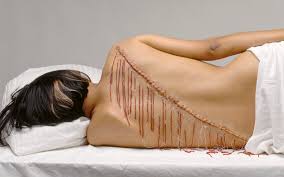
Rebecca Belmore, Fringe, 2007
Lesson
This lesson focuses on works of art created from the 1970s to the present day; however, I find it useful to begin with a work of art that is closer to the world of the students in the classroom. In 2014, Columbia University undergraduate student Emma Sulkowicz drew national attention with her senior thesis project, Mattress Performance (Carry That Weight), 2014–15, a durational performance that merged art with her own life. The performance consisted of Sulkowicz carrying a standard, 50-lb dorm mattress in protest of the university’s mishandling of her experience of being sexually assaulted by a fellow student. The rules for the performance were that she needed to carry the mattress everywhere she went on campus as long as her accused assailant remained enrolled or she graduated. She could not ask for help from others but could accept help if it was offered to her. Walk students through some images and stories of the performance and note that the artist was occasionally helped by friends, at times by strangers, but often she carried the mattress alone. Show this video of Sulkowicz walking across the stage as she graduates and ask students to spend a few minutes free writing, and do a think-pair-share about the symbolic meanings of this project.
Students readily understand the key metaphors laden within the work, its title, and its rules. Here the mattress, at once a banal object, functions as a marker of trauma and the scene of a crime, while also symbolizing systemic failures to address sexual assault. By dragging it through public spaces, Sulkowicz brings sexual assault into the light of day, transforming what is often forcibly silenced, or rendered a personal and private burden, into a visible and public act of protest. Here it is useful to ask students what their understanding of “the personal is political” is and offer a definition: individual experiences (especially those related to gender, race, class, and sexuality) are shaped by broader social, cultural, and political structures, and thus are also collective issues with shared political relevance. Sulkowicz transforms her experience and an everyday object into a political symbol. When others join in helping her to carry this burden, the performance becomes a powerful metaphor for the collective support that survivors often need but either may not receive or feel unable to ask for. Starting with this recent example highlights this lecture’s focus on public art and socially engaged practices as a long-standing tool used by artists to confront gender-based violence, while also allowing us to trace continuity between these contemporary concerns and strategies back to earlier feminist practices of the 1970s.
Gender-Based Violence (GBV) and the Origins of Feminist Art
- How did the idea that “the personal is political” shape early feminist art practices?
- In what ways did artists of the 1970s use art to bring sexual assault and gender-based violence out of the shadows and into public discourse?
- What connections can we draw between feminist issues of the 1970s and contemporary struggles around gender-based violence today?
Depending where this lecture falls in the semester, your students may have already seen works related to this subject that intersect with the emergence of feminist art. US-American artists Suzanne Lacy and Leslie Labowitz’s works in Los Angeles are good entry points into the convergence of feminist activism and new forms of artistic practice that characterized this period. Both artists were pioneers of performance and socially engaged practice (or socially engaged art) that confronted issues of gender-based violence and worked directly with communities to both raise awareness and instigate change. You might begin chronologically with Suzanne Lacy’s multidimensional project Three Weeks in May (1977), a work that utilized performance and community collaboration to confront the epidemic of sexual violence against women in Los Angeles, CA, during a time when rape was often silenced, stigmatized, and inadequately addressed by law. Students will likely see similarities between then and now, but you should also contextualize this issue for 1977. For example, you can share that “spousal rape” was not considered a crime in the U.S. at that time and would not be made a crime nationwide until 1993. Another touchstone for students might be “Take Back the Night” marches, which have become common on college campuses, but did not begin in the U.S. until 1978.
Lacy wanted to use her work to bring greater visibility to this wide-spread and complex issue in ways that would address the needs of her local community in both public and institutional spaces. Over three weeks, she gathered and displayed daily police reports of sexual assaults, marked incidents on a large map installed at City Hall, and organized performances, workshops, and community events across the city that combined installation, performance, and activist practices. As the project is so multifaceted, it is helpful to show students a video that breaks down its various aspects and then ask students to respond to what stands out to them about Lacy’s approach. How do the choices she makes relate to the original goals of her project? Here you can stress her desire to reach an audience that was outside of the art world and how the work itself needs community engagement to be effective. You might also consider how the work allows for many voices to be brought to the forefront as Lacy collaborated with many artists, including Leslie Labowitz and others enrolled at the Woman’s Building in Los Angeles, and community members (activists, police, politicians) to make the project a reality.
Lacy collaborated with Leslie Labowitz again this same year to create In Mourning and In Rage (1977), a feminist counter-narrative to sensationalist news coverage pertaining to the murder of ten women in Los Angeles. The media coverage surrounding these murders, attributed to the “Hillside Strangler,” most often centered on the perceived inevitability of these crimes, which contributed to a climate of fear and victim blaming. In Mourning and In Rage reframed this narrative within the broader context of violence against women. For the performance, which can be viewed here, a motorcade of sixty women followed behind a hearse to City Hall, from which ten towering figures in black robes emerged. Each took to the microphone to name a different form of violence against women and its current statistics, including sexual abuse, domestic violence, and violent imagery in visual culture. These declarations were echoed by a chorus declaring, “In memory of our sisters, we fight back!” and each figure was given a red cloak as a symbol of women’s capacity for self-defense. Amplified by the extensive media coverage, the performance combined grief with public rage, transforming mourning into a collective protest that made visible the systemic roots of GBV and the urgency need for solutions. Like Three Weeks in May, the project incorporated a wide range of participants – artists from the Woman’s Building, members of the Rape Hotline Alliance, the City Council, and families of the victims – which contributed to its infiltration into local and statewide news, transforming the performance into a work of media art. After the performance, City Council members voiced their support in the press and the Rape Hotline Alliance pledged to start self-defense classes. You might use this outcome to introduce questions of efficacy that apply to works of activist art. How can we measure if an artwork has “worked” or not? Is an activist artwork still successful if it doesn’t achieve tangible or immediately recognizable change? These projects by Lacy and Labowitz were later connected to the collaborative group, ARIADNE: A Social Art Network (1977–82), which they co-founded to support future community-based projects committed to ending GBV.
GBV is, of course, not isolated to the context of the United States, and there are examples of feminist artists using their work to address similar issues elsewhere in the world during this same period where feminism and art are merging. Mexican artist Mónica Mayer’s The Clothesline (El tendedero, 1978-ongoing) was a socially engaged installation that confronted these experiences as they existed in Mexico City. Originally presented at the Museo de Arte Moderno, Mayer spent one month walking around the city asking women to write responses to the phrase, “As a woman, what I hate most about this city is…” on small slips of pink paper. Mayer compiled these responses and pinned them to a clothesline constructed on pink poles inside of the gallery space. This accumulation of hundreds of testimonies, many describing experiences with harassment in public spaces, gave visible form to the feminist slogan “the personal is political,” and many visitors to the exhibition added their own responses onto the cards.
You may also consider Mayer’s formal choices in creating this installation: Why pink? Why the clothesline and not another method of display? This invites discussion of how the work transforms a typical apolitical symbol of domestic labor into a collective site of protest and operates as a metaphor for airing out the dirty laundry of the city and cleansing these experiences in their collective presentation. Mayer re-staged The Clothesline a year later while she was a student at the Women’s Building and participated in Suzanne Lacy’s project Making it Safe (1979), also dedicated to raising awareness on violence against women in Los Angeles and a part of the ARIADNE: A Social Art Network. For this version, Mayer met with local community groups to discuss the questions she would ask for the clothesline, which focused more on issues of safety. She presented the results in a more immediate manner, hanging the papers up in the street as people responded, transforming sidewalks into temporary gallery spaces.
Mayer has repeated the project dozens of times since the 1970s with each iteration asking different questions drawn from her discussions with the community she is working with. These clotheslines often consider similar questions that were brought up in her first iteration in 1978 with regards to the experience of sexual harassment and GBV. This work gained much greater international recognition in the more recent context of the MeToo Movement. This MeToo Movement and awareness campaign was originally founded by activist Tarana Burke in 2006 to support survivors of sexual violence and gained global visibility in 2017 after it was amplified on social media (#metoo). Around this same period, activists, educators, and artists around the world have taken Mayer’s model and made their own clotheslines that speak to questions of harassment and gender-based violence in their own communities. She has worked to document these manifestations via a Facebook page dedicated to the project and has no problem with the work being used in different contexts.
You can ask your students to think about ongoing relevancy of the questions raised in Mayer’s clotheslines then and now. What does it mean to continue to ask these questions? Why has the clothesline endured as a creative method to engage in this discussion? You can compare these reactivations with Suzanne Lacy’s recreation, Three Weeks in January (2012), which explored the status of sexual assault in Los Angeles, 35 years later. A short video on the project is available on Lacy’s website. Mayer says that she sees her work is ultimately a tool of education, an object that facilitates dialogue, which she believes is paramount in the fight against harm. Mayer talks about this aspect in this video from 2017. The continued re-staging of these works underscores the urgency of these issues for students today as well as the role art can play in bringing them to a wider, public audience.
Performance Art and Feminicide in Latin America
- How have artists responded to the widespread crisis of feminicide across Latin America since the 1990s?
- In what ways has performance art served as a tool to memorialize victims and what tensions arise when artists use their own bodies to represent the stories of others?
- How are histories of colonial violence connected to contemporary forms of gender-based violence?
Similar strategies have emerged in works of artists across Latin America to address the ongoing crisis of feminicide, the intentional killing of women and girls because of their gender. Alarming recent statistics from 26 Latin American and Caribbean countries show that at least 11 women are murdered every day due to their gender and 63–76% of women have experienced some form of gender-based violence in their lifetime. It’s also important to note that these statistics are based on reported cases, and thus the actual numbers are likely much higher. Artists working in this context have expanded feminist performance and socially engaged practices to respond to the systemic disappearance and murder of women, particularly in Mexico, where reported feminicides have doubled since 2015. This is connected to an increase in forced disappearance across the country, which has risen to more than 130,000 desaparecidos (disappeared persons) reported as of 2025. Among the most prominent artists in this realm is Lorena Wolffer, whose work both makes visible the violence that shapes women’s daily lives and demands accountability from state institutions.
Wollfer’s While We Slept (The Case of Juárez) [Mientras dormíamos (el caso Juárez)], 2002–12) was made in response to the escalation of feminicides in Ciudad Juárez, Mexico. This border city became infamous during the mid-1990s for a wave of feminicides in which hundreds of women, many employed in maquiladoras (largely U.S.-owned assembly factories notorious for their exploitative labor conditions), were abducted, raped, and murdered. These crimes remained largely unsolved, and feminicide victims were often blamed by police and the media for their own deaths through sexist tropes that portrayed women as sex workers, drug addicts, or otherwise irresponsible, narratives that deflected from the state’s failure to protect them. Sayak Valencia has examined this violence through the framework of what she calls gore capitalism, arguing that in these border economies, women’s bodies become sites where the brutality of neoliberal capitalism, patriarchal power, and systemic impunity converge, rendering women expendable.
Since Woffer based her performance on police reports, her body became a stand-in for fifty women who were murdered in Ciudad Juárez. In a morgue-like setting, the artist played recordings of police describing their corpses and marked her own body with a surgical pen to record the evidence of each woman’s fatal wounds. The marks accumulated into what Wolffer referred to as a “symbolic map” that documented these individual cases and “represented institutionalized violence against women in Ciudad Juárez.” By exhibiting herself as both the subject and object of violence, Wolffer forced her audiences to confront the normalization of these deaths and the passive role of spectatorship. You could ask students to consider the title for the work and discuss its implications in terms of the everydayness of this violence, its connections to media coverage of violence against women, and society’s general inaction.
Wolffer continued to address the normalization of GBV through various performance projects, such as February 14 (14 de febrero, 2008). This work emerged from her discussions with a woman named Fabiana at the Diarq IAP (Desarrollo Integral de la Familia y de la Mujer, Institución de Asistencia Privada), a non-profit founded in Mexico City in the 1990s that provides shelter, support, and legal aid to women and children survivors of domestic violence. Fabiana and her four children had endured violent abuse from her husband, who compelled them to sell candy to drivers stopped at red lights, and would beat them when they failed to sell the entire supply. For this performance, Wolffer partially recreated Fabiana’s story on the streets of Mexico City, offering (not selling) wrapped chocolate hearts to drivers on Valentine’s Day. Rather than traditional advertising imagery, Wolffer included portions of Fabiana’s story inside the chocolate wrappers, juxtaposing the languages of romance, celebration, capitalism, and consumption with the reality of domestic violence. You might ask your students to compare these two performances, which deal with two different aspects of GBV, and consider how they reveal the intersections between private and public forms of harm, the normalization of violence against women, and the economic structures that sustain it.
Like Wolffer, Guatemalan artist Regina José Galindo uses her own body as a stand-in for the bodies of others, using performance to confront the normalization of gendered and state violence in her home country. For (279) Blows [(279) Golpes], 2005), performed at the 2005 Venice Biennial, Galindo enclosed herself in a cubicle and whipped herself 279 times, one for each reported case of feminicides in Guatemala from January 1–June 9 of that year. The work was a “sound performance,” as the audience could not see, but only hear the impact of the lashing on the artist’s body, which was transformed into a momentary register of the collective pain of these impersonal statistics. Painful endurance is a staple of Galindo’s work, seen again in her performance Perra (Bitch, 2005), in which she carved the title into her right thigh with a knife, a word often found carved in the flesh of victims of feminicides. The work can be read as both a condemnation of these atrocities and an act of empathy with the victims that forces audiences to witness violence that is easily ignored.
In other performances, such as The Truth (La verdad, 2013), Galindo addresses the legacies of colonial and military violence that continue to shape women’s lives in Guatemala. During Guatemala’s civil war (1960–1996), the military carried out a genocidal campaign against Mayan Ixil communities, marked by mass killings (an estimate 200,000), forced disappearances, and widespread sexual violence. During the 2013 trial of former military dictator and president Efraín Ríos Montt, Mayan Ixil women bravely testified about the sexual violence inflicted upon themselves and their communities during the war. Ríos Montt was convicted of genocide and crimes against humanity; however, his conviction was quickly overturned and his retrial was never completed due to his death in 2018. Galindo’s performance responded to the deep injustice felt within the country at the overturning of Rios Montt’s conviction. For more than an hour, Galindo read the testimonies of women survivors while a dentist regularly injected anesthetic into her gums (video here). As time goes by, it becomes more difficult for the artist to speak, mirroring some of the traumatic accounts in the written testimonies.
Ask students to reflect on the different ways these artists use their own bodies to confront gender-based violence, their relationship to their audiences, and their focus on witnessing. What does it mean to see or hear violence unfold in real time? How does being positioned as a spectator complicate the boundaries between empathy and complicity? You might also guide discussion toward the tension between the individual and the collective in these works. How does telling identifiable testimonies, such as Fabiana’s story, compare with the anonymous women of Juárez and Guatemala? Are there any ethical concerns in momentarily representing or standing in for these women? These questions encourage students to consider how these works move beyond representation to more directly implicate their audiences, asking viewers to reflect on their own roles within systems that enable (or ignore) gender-based violence. This can be a good springboard into conversations surrounding shared responsibility and action.
Activism and Ancestral Traditions
- How does the ongoing crisis of feminicide connect with longer histories of colonialism and Indigenous resistance in the Americas?
- How can ancestral practices that pre-date colonization transform abstract statistics into embodied acts of remembrance that work towards healing?
- What possibilities emerge when artists use communal forms of making to navigate both personal grief and collective solidarity?
The next section looks at artists of Indigenous descent who approach gender-based violence through more material and intergenerational forms of making. These artists often fuse activism with ancestral knowledge, creating works that seek not only to denounce violence but also to educate, heal, and strengthen community bonds. Violeta Quispe is a Peruvian artist and activist whose work draws from the Quechua painting traditions of the rural community of Sarhua, Ayacucho. This best-known works from this region are the Tablas de Sarhua (Boards of Sarhua), paintings made on long wooden planks “to record, through images and texts, the close relatives of the owners of the house and the ties of reciprocity that are established with the compadres who give the Tabla” (see this exhibition). These traditions evolved after the 1960s, when many Sarhuinos migrated to major Peruvian cities, like Lima, and began depicting nostalgic scenes of the rural life they had left behind, as well as more political images that denounced the injustices faced by their communities. Violeta Quispe Yupari learned these traditions from her mother (Gaudencia Yupari) and father (Juan Walberto Quispe), both painters and continues to translate their format and visual vocabulary to confront issues of colonialism, patriarchy, LGBTQIA+ rights, and GBV as connected with contemporary Andean women’s experiences.
In the work In the name of the mother and the childless daughter. Amen (Mamapa sutinpi, churiy mana churiyuq. Amen, 2024) she uses her own menstrual blood to paint her personal story on a maguey trunk as it intersects with broader histories of GBV and motherhood in Peru. The work begins at the bottom with a depiction of the state-sponsored forced sterilization of over 20,000 women in Peru. Between 1995 and 2000, the Peruvian government under Alberto Fujimori carried out a forced sterilization campaign that targeted mostly Indigenous, rural women, in a mass act of racialized and gendered violence. From this violent history emerges Quispe’s mother (Gaudencia) and her own (Violeta) stories – Gaudencia, a woman who escaped forced sterilization, but also experienced unwanted pregnancies and the inability to access safe and legal abortions; Violeta, someone who faced infertility, but manages to break a cycle of ingrained patriarchal violence. These parallel narratives that emerge from a shared history invite students to reflect on how the denial of bodily autonomy serves as a form of GBV.
Another artist who creates works in dialogue with Andean indigenous traditions is Luzenne Hill, who draws on khipus, systems of communication used by many indigenous civilizations (including the Wari and Inka) to record information using knots and color. Hill created the performance/installation, Retracing the Trace (2012) draws from the artist’s experience of sexual assault in 1994, in which her attacker used a cord to strangle her. For the installation, Hill created 3780 knotted strands of red cord, a number representing the estimated unreported rapes that occur in the United States each day. Hill activated the space daily by rearranging the khipu threads in the space and tracing the outline of her body as it was found in the leaves and mud where she was attacked. An enrolled member of the Eastern Band of Cherokee Indians, Hill connects her experience with the broader silencing of sexual violence experienced by native women in the U.S., who are nearly three times more likely to be sexually assaulted than the national average. Hill is not of Andean heritage, however, her reference to the khipu evokes shared histories of knowledge-making and technologies of the Americas that pre-date colonization. The khipu continues as a form of communication to tell her story, it is an archive of her and so many others’ experiences. The cords, dyed with cochineal (a red pigment derived from insects native to Mesoamerica) carry symbolic meaning: red as the color of blood, but also healing, ancestral aesthetics, and survival.
Another work that seeks to re-humanize data using ancestral traditions, Cannupa Hanska Luger’s Every One (2018), is a monumental (12 x 15 ft) beaded curtain that memorializes missing and murdered Indigenous women, girls, queer, and trans people across North America. The work consists of 4,096 handmade clay beads, each representing the then-current recorded statistics of missing and murdered women in Canada. The project began under the title of the MMIWQT (Missing and Murdered Indigenous Women, Queer, and Trans) Bead Project and seeks to also acknowledge the hundreds of lives lost to intersecting forms of gendered and settler colonial violence that remain unrecorded. Other acronyms that are widely used are MMIW (Missing and Murdered Indigenous Women) or the more inclusive MMIWG2S+ (Missing and Murdered Indigenous Women, Girls, Two Spirit, and +gender diverse individuals).
You should discuss some of the statistics related to this crisis, such as the fact that Indigenous women in the US are murdered at 10x the national rate and over 85% of American Indian and Alaska Native women will experience violence in their lifetime. This video helps give context to the crisis and focuses on the many women working to bring about justice. To create this work, Luger (an enrolled member of the Three Affiliated Tribes of the Fort Berthold Reservation) put out a call out to communities across the US and Canada to send him 2 inch clay beads. Once returned to the artist, they were fired, stained with ink, and assembled into strands to form a pixelated portrait of an anonymous indigenous woman. This image was taken from the photograph by First Nations (Kaska Dena) artist Kali Spitzer, Sister (2016), taken of an unnamed Indigenous woman whose sister was murdered. Having watched the video about this crisis and knowing more about this work, you can ask students to consider some of the formal choices the artist is making. Why choose this image of an anonymous woman? What does it mean to “witness” this crisis through the artwork rather than in statistics or news coverage? Can an artwork like Every One bring about real social change? Where does its power lie (you might think here about communal mourning or creating new forms of solidarity through making)?
Another memorial project aimed at raising awareness of this crisis is Walking with Our Sisters (2012–19) (see below), a large-scale, community-driven project initiated by Métis artist Christi Belcourt to honor the thousands of MMIWG2S+ in Canada and the United States. Conceived to make the magnitude of this crisis visible, as well as mobilize collective grief into action, the project invited participants to create vamps (moccasin tops or “uppers”), each representing one missing or murdered person. The unfinished moccasins symbolize these unfinished, but not forgotten, lives, while affirming their ongoing presence in their absence. In response to an open call to “all caring souls,” more than 2000 pairs of vamps were created in over 65 beading circles that spontaneously formed across North America between 2012 and 2013. These gatherings became spaces for communal learning, healing, and solidarity, linking artmaking, activism, and community care. A web archive of the project can be accessed here. This video of coordinators receiving vamps is helpful for students to recognize the project’s emotional impact.

The exhibition component to Walking with Our Sisters spread awareness of the MMIWG2S+ to over 25 venues in Canada and the US over the course of seven years. I find it useful to isolate one of the installations (Shingwauk Auditorium, Algoma University, 2014) for students to understand how the project treated each venue with care that connected with ancestral practices. Visitors removed their shoes before entering, were smudged with sage, and offered a small tobacco tie to hold in their left hand, close to their heart, as they moved clockwise through the space. This tobacco was returned before they exited and burned in a sacred fire. Each installation was overseen by indigenous elders and volunteers who were on hand to educate visitors on the installation and oversee its ritual aspects. Accompanied by recordings of traditional songs sung by women performers, the installation offered a powerful experience of collective mourning, through gestures that emphasized reverence for ceremony and reflection.
You might return to the questions asked of Luger’s work in relation to the power of this project in generating mourning or solidarity through collaborative making and art’s potential to intervene in systems of violence and erasure. In thinking about all four of the aforementioned projects that work through traditional materials and ancestral practices, you can ask them to discuss how they all draw from trauma and attempt to create spaces for healing (individually and collectively).
Transforming Public Spaces and Monuments
- How are artists reclaiming public spaces marked by histories of violence to confront contemporary gender-based oppression?
- In what ways do interventions in billboards, transportation systems, public plazas, and monuments challenge the visual languages of the urban environment and make gender-based violence visible?
- How can transforming these sites of fear into spaces of solidarity create new forms of collective empowerment?
Building from the notion of ancestral methods as a tool for healing and resistance, you can shift towards artists who are moving their work out of galleries and museums to address these issues in public spaces. Canadian Anishinaabekwe artist Rebecca Belmore’s Fringe, 2007 is a good bridge into this discussion. The photograph installed on a billboard in Montreal depicts a reclining woman (a self-portrait) whose back bears a long scar running from shoulder to hip. Upon closer inspection, students will recognize her wound has been threaded together with red beads, a visual metaphor for historic and ongoing violence against Indigenous women and girls, but also – similarly to Luzerne’s work with khipu traditions – the power of ancestral methods to bring about healing. How does placing this image in public space change its meaning compared to a gallery setting? The billboard, a format associated with advertising, brings this wounded body into the public sphere of the street, challenging spectators to see the violence has been inflicted to this body, and its resilience. In Belmour’s words: “The Indigenous female body is the politicized body, the historical body. It’s the body that doesn’t disappear.”
Fringe provides a powerful example of how artists have continued to transform the street into a site of activism, memory, and visibility long after the initial performances from the 1970s outlined at the start of this lecture. Artists working in Mexico City have extended this reclamation of public space to the very sites where gender-based violence occurs, transforming city streets and public transportation systems into spaces of collective presence and resistance. Mexican artists Lorena Wolffer’s I Am Totally of Iron (Soy totalmente de hierro, 2000) and Cerrucha’s Trench (Trinchera, 2020) exemplify this approach. Wolffer’s project responded to a sexist ad campaign promoting a popular department store with ten billboards positioned around the city that questioned the original ad’s stereotypical representations and the harm they cause. In one image from this “counter-campaign,” Wolffer’s model, theater student Mónica Benítez, stands defiantly on a public bus as a man is pressed uncomfortably close behind her, accompanied by the text: “The problem is that you think my body belongs to you.” You might ask students to consider the relationship between text and image in this work, especially Wolffer’s use of the word “you.” Who is being addressed, and how does that choice position the viewer? Displayed throughout the city for two months, these images confronted the normalization of violence against women and directly implicated the public in the dynamics of that violence.
Cerrucha’s more recent photographic collage Trench (Trinchera, 2020) took a different approach to confronting harassment and violence in public transportation through a participatory, photo-based project in Mexico City. The work brought together more than one hundred participants, including women, non-binary individuals, young people, girls, and babies, who stood arm-in-arm forming to form a human trench as an act of unity. Participants were encouraged to express themselves, and many inscribed feminist slogans onto their bodies, and the resulting photographs were installed in 9 subway cars and on columns inside of the Pino Suarez subway station, chosen because one it had the highest rate of complaints of sexual harassment in 2019. While the Mexico City Metro introduced women and children-only subway cars in the early 2000s to curb harassment and assault, these measures have not eliminated the problem. A 2016 national survey said that 9 out of 10 women passengers felt unsafe using public transportation in the country, highlighting the need for ongoing public awareness and action. Trinchera reclaims this space through a gesture that reminds commuters, in particular women and non-binary people, of their potential strength, protection, and joy in solidarity, rather than their isolation, fear, and victimization.
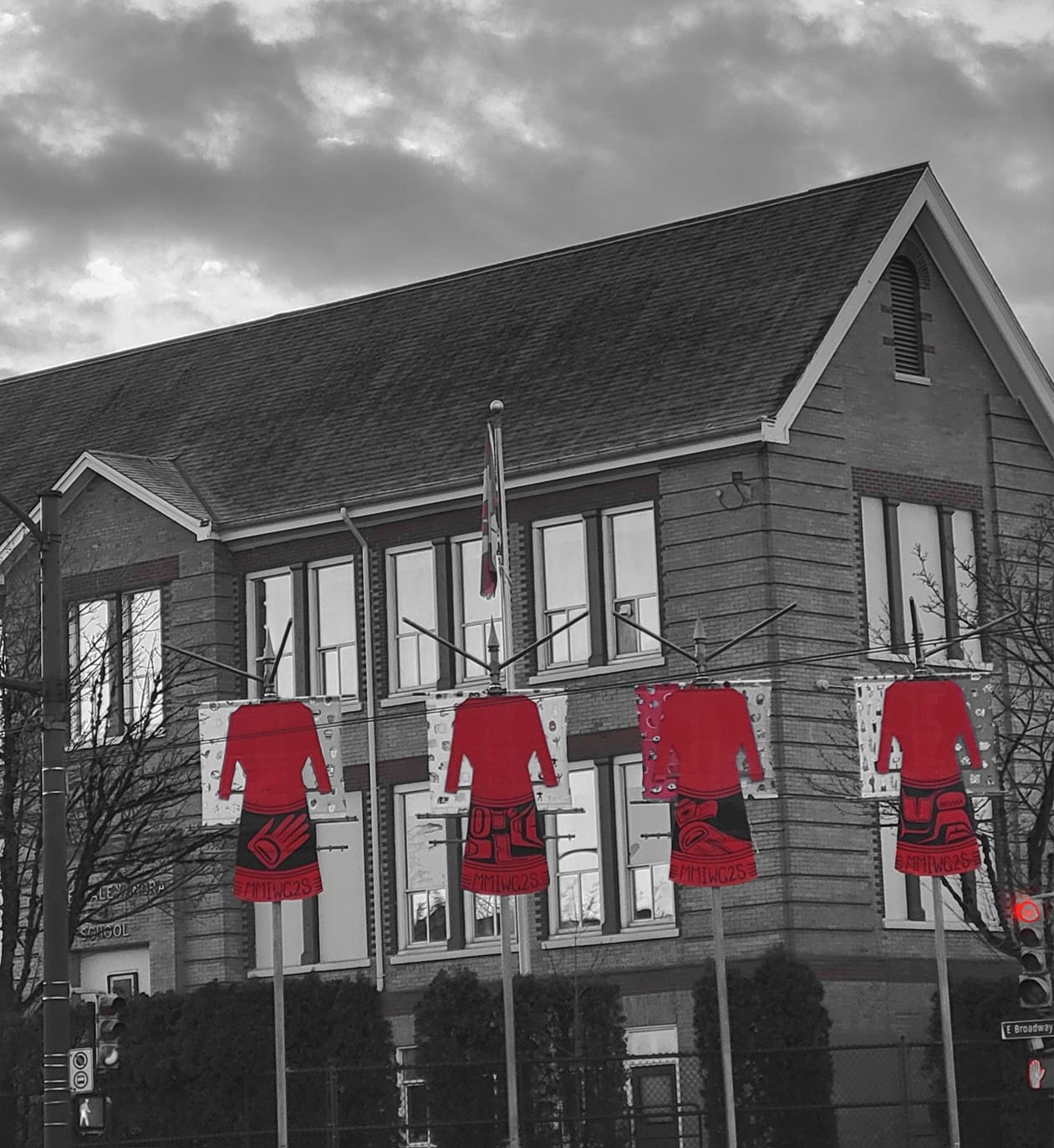
Another notable example of an artist collaboratively reclaiming public space is Elina Chauvet’s Red Shoes (Zapatos rojos, 2009–ongoing). The work was first installed in Ciudad Juárez (the aforementioned city marked by the feminicide crisis of the 1990s) and originated as Chauvet’s personal response to the murder of her sister, who was killed by her husband. The artist has said the project was both “a way to take away [her] pain through the art” and “a direct message to the [Mexican] government” calling out its lack of attention to the feminicide crisis. The first installation consisted of 33 pairs of red women’s shoes arranged in a public plaza, each standing in for a disappeared woman. It has since evolved into a global project of collective mourning and protest and, like the participatory projects discussed earlier in this lecture, invites community involvement: people will now donate shoes, paint them red, and help install them in public areas. The project has been restaged in dozens of cities across Latin America, Europe, and the United States, demonstrating how a simple gesture can communicate across borders. You might draw this work together with Metis artist Jaime Black’s The REDress Project (2010–ongoing). This series of public installations of empty red dresses suspended in outdoor and institutional spaces to honor MMIWG2S+, transforming clothing into haunting symbols of loss, their movement in the wind evoking the presence of those who are no longer here. You can ask students to reflect on how color operates symbolically across these different cultural contexts.
The color red is also a key element in Bordando por la Paz y la Memoria (Embroidery for Peace and Memory, 2011–ongoing), a participatory project that uses thread to transform acts of mourning into acts of resistance. Emerging as part of a nationwide grassroots movement, embroidery collectives have formed in cities across Mexico to both memorialize and seek justice for victims of violence, feminicide, and forced disappearance. Gathering in public plazas in major cities, participants embroider handkerchiefs with the names and stories of victims together, creating a support network for families of the murdered and disappeared, while making visible the human toll of state and cartel violence. Red embroideries signify the loss of a life, while green (the color of life) symbolizes the hope that a disappeared person will be found. Like Zapatos rojos and The REDress Project, this domestic material becomes a vehicle for public testimony. You might ask students to consider how the quiet, communal labor of embroidery intervenes in public space differently from more overtly confrontational forms of protest. What kinds of witnessing and solidarity does this slower, tactile form of activism invite? How does using embroidery as a form of protest challenge the gendered associations of this practice?
Within this same context, feminist collectives in Mexico have extended the practice of public intervention to the realm of monuments themselves, challenging the patriarchal narratives that dominate civic spaces. One of the most powerful examples is Antimonumenta-Justicia, 2021, a sculpture that was installed in place of the Christopher Colombus statue along Mexico City’s main avenue, Paseo de la Reforma. On September 21, 2021, activists took over the then-empty plinth (the Columbus statue had been removed due to fears it would be defaced in an upcoming march for Día de la Raza/Indigenous Peoples’ Day) and installed a wooden figure of a woman painted in purple (the color associated with the feminist movement in Latin America) with a raised fist and a cry of “JUSTICIA” (Justice) on her back. Working alongside families of women who had been murdered or disappeared, they painted victims’ names across the barricades surrounding the plinth and defended the site from authorities who continued to try and remove their intervention. On International Women’s Day (March 7), 2022, activists replaced the wooden sculpture with a more durable steel version, and the following year secured assurance from the local government that their intervention would not be removed. As a result of these efforts (which are ongoing), the area once honoring Christopher Colombus has been renamed the Glorieta de las Mujeres que Luchan (Roundabout of the Women Who Fight). Not simply a monument, the space has been transformed into an active site – at once a memorial to victims of feminicide and colonial violence, an educational site (with text panels) to raise awareness about GBV, and a space for ongoing feminist mobilization and protest art. For example, a version of Mónica Mayer’s clothesline was installed around the space that addressed the question of why people might not report sexual assault.
Similar to Antimonumenta, which reclaims civic space from patriarchal and colonial histories, Brooklyn-based artist Doreen Garner’s Purge (2017) confronts monuments that uphold intersecting histories of racial and gendered violence in the United States. This work was created as part of the exhibition White Man on a Pedestal, which responded to the statue of J. Marion Sims that had occupied space next to Central Park (Fifth Avenue and 103rd Street) in New York, since 1934. Sims, the so-called “father of modern gynecology,” notoriously tortured enslaved Black women’s bodies, experimenting on them without anesthesia to test his theories. Garner’s work consisted of different interventions into replicas of the sculpture, including a collaborative performance of Sim’s vesicovaginal fistula closure surgery. A video of the performance and Garner discussing the work and its connection to her experiences with medical trauma is featured in Art21. Performing with other Black women, and surrounded by sculptures of mutilated silicone hanging from meat hooks that make up her work, Rack of Those Ravaged and Unconsenting (2017), Garner temporarily inverts the power dynamics of these histories of racial and medical violence. Here the white male body is positioned as the object of scrutiny and mutilation, exposing how public monuments glorify figures complicit in systemic racial and gendered violence. You might ask students how Garner’s work redefines the function of monuments differently than Antimonumenta-Justicia and consider what catharsis might be found in her performative gestures. In 2018, the Sims statue was relocated to Green-Wood Cemetery (where Sims is buried) and installed without a pedestal. A sculpture by local artist Vinnie Bagwell, Victory Beyond Sims, won a competition to replace the original Sims statue, but it has yet to be installed.
Garner’s work exposes how monuments can both glorify and conceal histories of violence, inviting viewers to confront the real bodies and stories that those “official” narratives erase. Photographer Nona Faustine took up a similar project in her series White Shoes (2012–21), in which she also reclaims sites of historical trauma connected to slavery and racial injustice in New York City. In these images, Faustine poses nude except for a pair of white heels at different landmarks built by enslaved labor or tied to the city’s involvement in the transatlantic slave trade. In one image, From Her Body Sprang Their Greatest Wealth (2013), the artist stands on an auction block in front of Wall Street. In another, Like a Pregnant Corpse the Ship Expelled Her into the Patriarchy, Atlantic Coast, Brooklyn, NY (2012), Faustine drapes her body across the jagged rocks of a landing spot for ships trafficking Africans to New York. Throughout the series her body acts as a temporary memorial for the lives brutalized and lost at these sites and a reminder of the generational nature of their trauma. Throughout the series, Faustine’s white shoes contrast with the vulnerability of her unclothed body, and you might ask your students why she would choose this visual marker, emphasizing aspects of femininity, class, and race they may symbolize. How do these visual choices connect with the titles she gives the images?
As a culmination to this section, you can invite students to reflect on what it means when artists and activists, rather than those in power, claim and redefine public space. How do these interventions and counter-monuments transform the meaning of shared spaces, make visible the stories that have been silenced, or use the body itself to rewrite public memory? You might also encourage students to compare temporary or portable gestures, such as embroideries and collective re-creations, with more permanent interventions, considering how each mode engages audiences and sustains memory over time.
To conclude you might ask students to return to the questions that foregrounded this lecture and compare how artists have used their work to make visible the persistence of GBV and to model creative strategies for resistance and care. What do these works reveal about art’s power to bear witness, educate, and heal? As a culminating discussion, you might invite students to consider questions of efficacy: how can we measure if a work engaged with these serious questions has been successful? Is it more effective to produce measurable outcomes, to shift public consciousness, or creative spaces for collective mourning and solidarity? Ultimately, these projects remind us that art has an important role to play in confronting GBV and sustaining the ongoing work of resistance and repair.
DELIVERY SUGGESTIONS
- Teaching this topic can surface intense emotional responses and lived experiences and it is important not to assume how students may be positioned in relation to this material. Students may be survivors, may know someone who has experienced abuse, may be navigating unsafe situations, or may carry intergenerational or community-based trauma connected to colonial, racial, or state violence. It is thus important to approach this material from a trauma-informed perspective, and I recommend steering away from overt descriptions or graphic representations of violence when teaching. I also recommend checking in with support networks on campus to see how these issues are approached with students from an institutional level. I make it clear for students that sharing personal experiences is always optional and that their critical engagement with the artworks (not personal disclosure) is my expectation in the lesson. Still, students may share sensitive information with you during or outside of class. You may consider consulting your Title IX coordinator if you have questions about policy, reporting obligations, or best practices for navigating these discussions.
- I provide students with advance notice that we will be covering this content on the first day of the semester and again the week before. I also make it clear that I will provide options for students who feel unable to participate in the lecture depending on their needs. Some students feel comfortable watching a recording of the lecture. Others may wish to learn the material but prefer not to listen to the discussion of their peers, in which case I will make my lecture notes available. If a student feels incapable of engaging with the material entirely, I will allow them to miss the lecture without penalty. In all cases, and with the whole class, I find a conversation about why understanding these histories in art matters beyond the classroom to be useful in establishing trust and empathy.
Suggestions for Engaged Activities
- As a follow-up activity that might connect with your prior lectures in this course, you can ask students to research an artist from an earlier historical period who also confronted or represented issues of GBV, such as Artemisia Gentileschi, Frida Kahlo, or Käthe Kollwitz. Students can analyze their work in relation to its social and political context and connect with a contemporary artist discussed in the lecture. You might expand this into a small, temporary exhibition (physical or digital) that pairs historical and contemporary works, highlighting continuities and shifts in how artists have confronted GBV.
- Modeling the activist nature of a number of these projects, you can ask students to research local resources that currently exist for those experiencing GBV (e.g., shelters, hotlines, advocacy organizations, counseling centers). Working in small groups, they can assess what information is publicly accessible, identify gaps, and collaboratively design an accessible resource, such as a pamphlet or poster, to distribute on campus or in their community.
- You can consider leading the class in restaging one of the works discussed on a small scale, adapting it to their own community. Corrie Boudreaux and I have written about the process of creating embroidery projects with our students that are in solidarity with Bordeamos por la paz, a group based in Ciudad Juárez, Mexico here. It is important to emphasize that these projects emerged from long-term relationships, trust, and direct collaboration with the collective, and should not be entered into lightly or reproduced without context. I would encourage educators interested in producing projects in solidarity with these collectives to reach out to them directly via social media and to use the exhibition of their embroideries to raise awareness about the issues the collectives themselves are drawing attention to.
- Many educators around the world, including myself, have recreated Mónica Mayer’s The Clothesline with their students. This project is easily adapted to the classroom; however, a word of caution: this project has the potential to surface systemic issues within the institution and has sometimes resulted in negative consequences. While such revelations are important, and in keeping with the spirit of Mayer’s original work, they also place students and instructors in vulnerable positions and potentially at significant risk. For this reason, educators should approach the project with extreme care and clarity. One suggestion to engage with the project but avert this level of risk is to adapt The Clothesline on a smaller scale, focusing the activity within the class itself. Students can use the project as a space for self-reflection, solidarity, and discussion, responding to questions that emerge from their own learning, experiences, or course themes. This more contained version maintains the work’s pedagogical power while ensuring a safer and more intentional context for engagement.
- Ask students to research a public monument, statue, or memorial in their city or region that commemorates a figure or event tied to patriarchal and/or colonial violence. After researching the monument’s history and the narratives it upholds, students can create virtual proposals for interventions that reimagine or recontextualize the site to address erased or silenced histories, especially those related to gender-based or colonial violence.